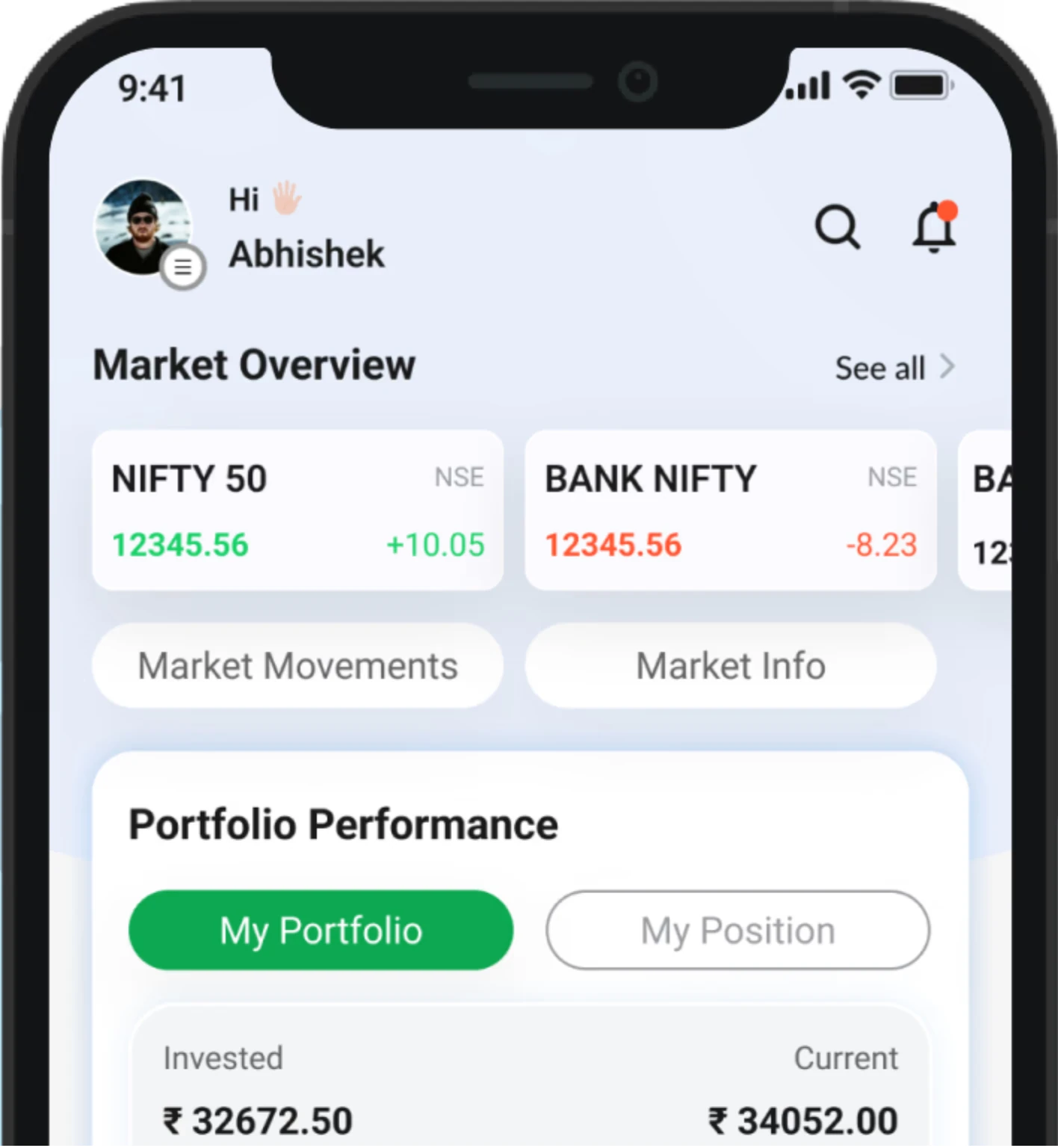


Invest in Mutual Funds Online

Invest in
Mutual Funds
An easy-to-use platform to start your investment journey and build long-term wealth with confidence.
Already an Existing User? Trade Now
Already an Existing User? Trade Now
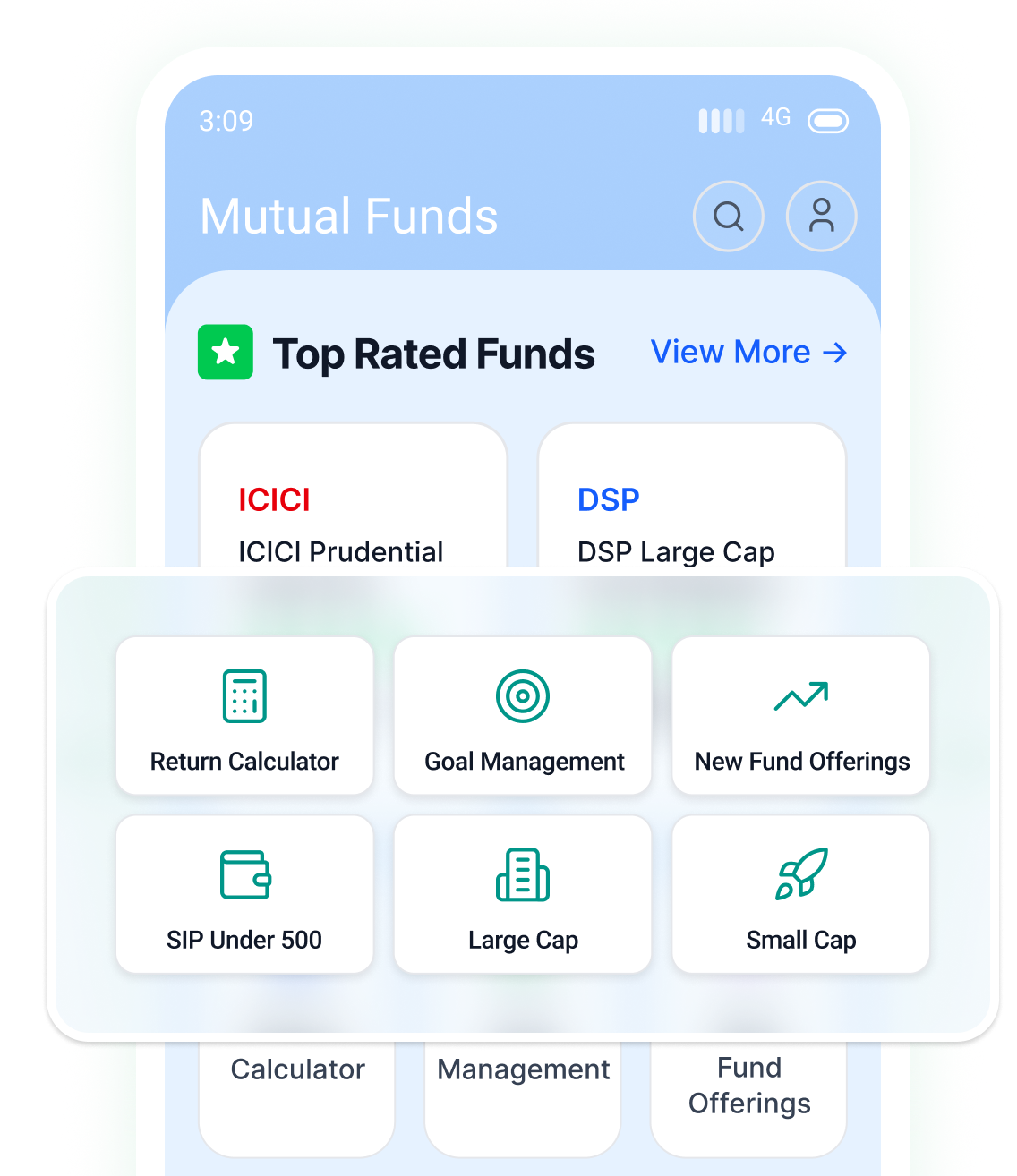
Everything You Need to Invest in Mutual Funds
Everything you need to discover, invest, and manage mutual funds in a simple, seamless way
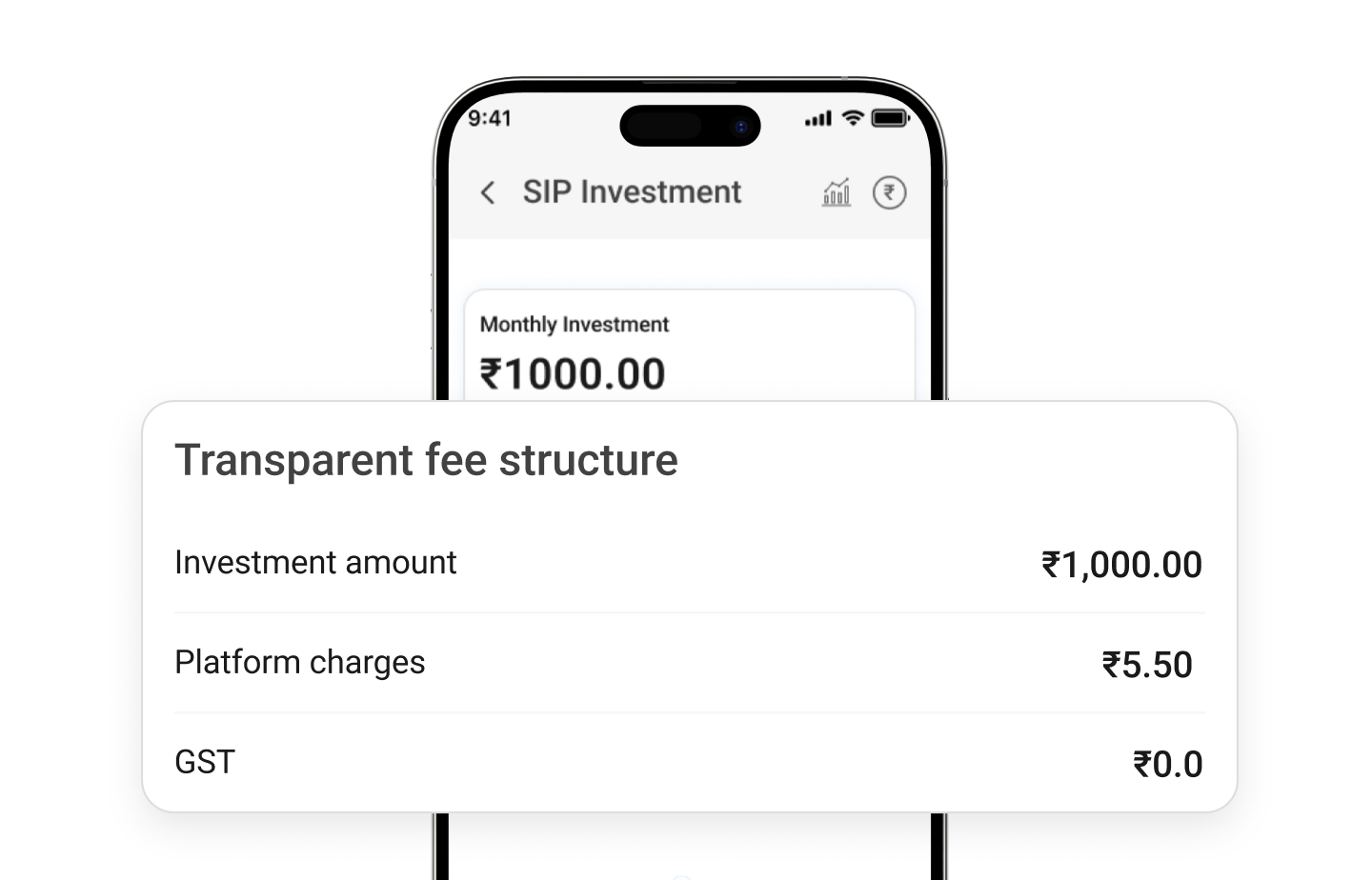
Simple & Transparent SIP Investing
Invest in mutual funds with clear, upfront costs and a platform built for long-term investing.

Start SIPs from Just ₹100
Begin with small monthly amounts and build wealth at your own pace.
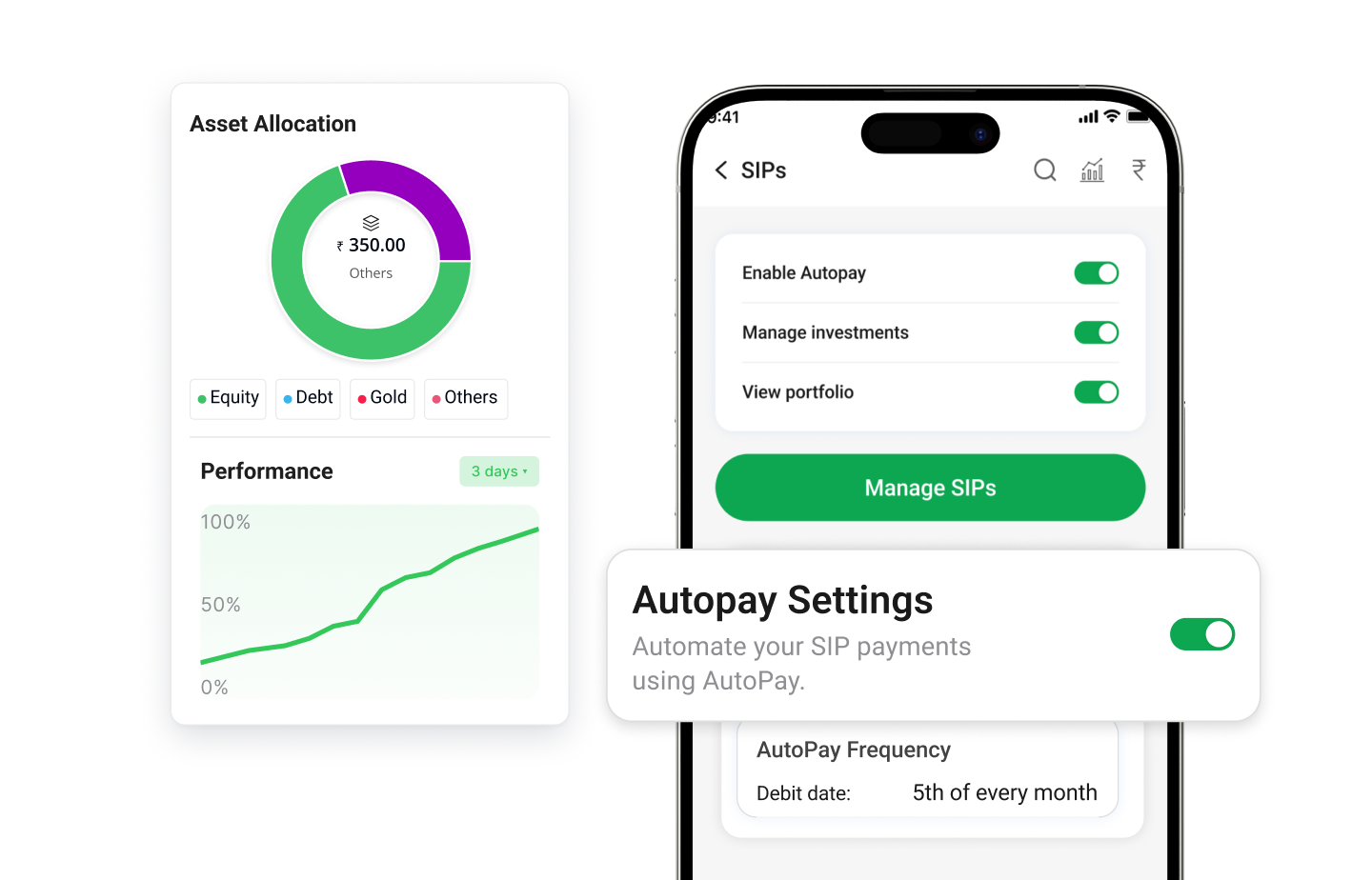
Full Control Over Your Investments
Set up AutoPay, manage SIPs, and track performance, allocation, and growth with ease.
Simple & Transparent SIP Investing
Invest in mutual funds with clear, upfront costs and a platform built for long-term investing.
Start SIPs from Just ₹100
Begin with small monthly amounts and build wealth at your own pace.
Full Control Over Your Investments
Set up AutoPay, manage SIPs, and track performance, allocation, and growth with ease.
Mutual Funds of Your Choice
Discover top-performing funds
No Data Found
| Fund Name | Action | |||
|---|---|---|---|---|
| No Data Found | ||||
Funds with high returns in the last 3-5 years
Mutual Fund Categories
Browse mutual funds across equity, debt, hybrid, index, and FoF categories for investing
Top Performers
5-year returns
No Data Found

Large Cap Funds
Invest in India's leading companies with proven track records. Perfect for steady, long-term wealth creation.
Browse Categories



Funds with high returns in the last 3-5 years
Invest in Mutual Funds in 3 Simple Steps
Go from selecting a fund to investing through SIP or lump sum in just a few clicks.
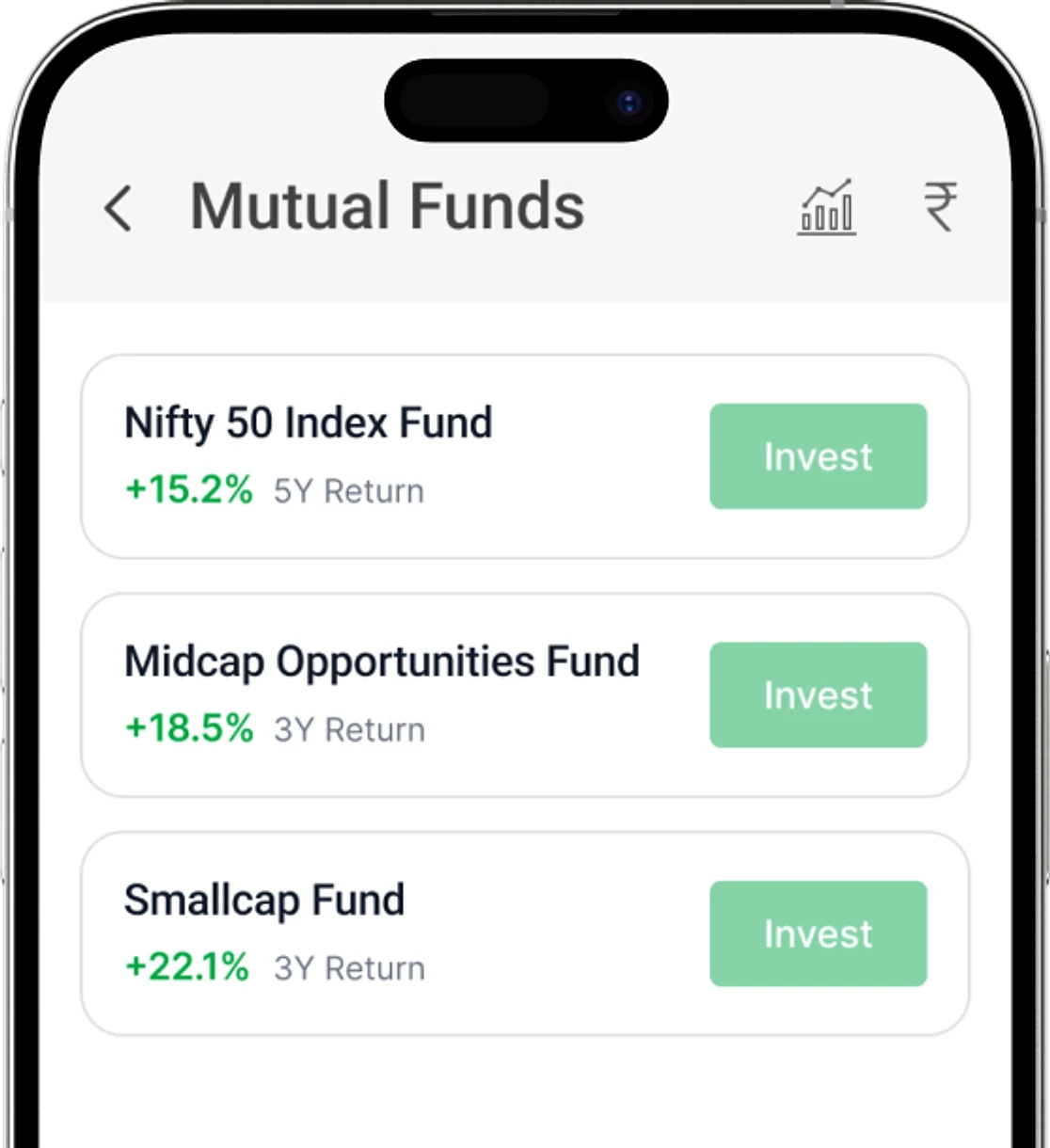
Choose a mutual fund you want to invest in

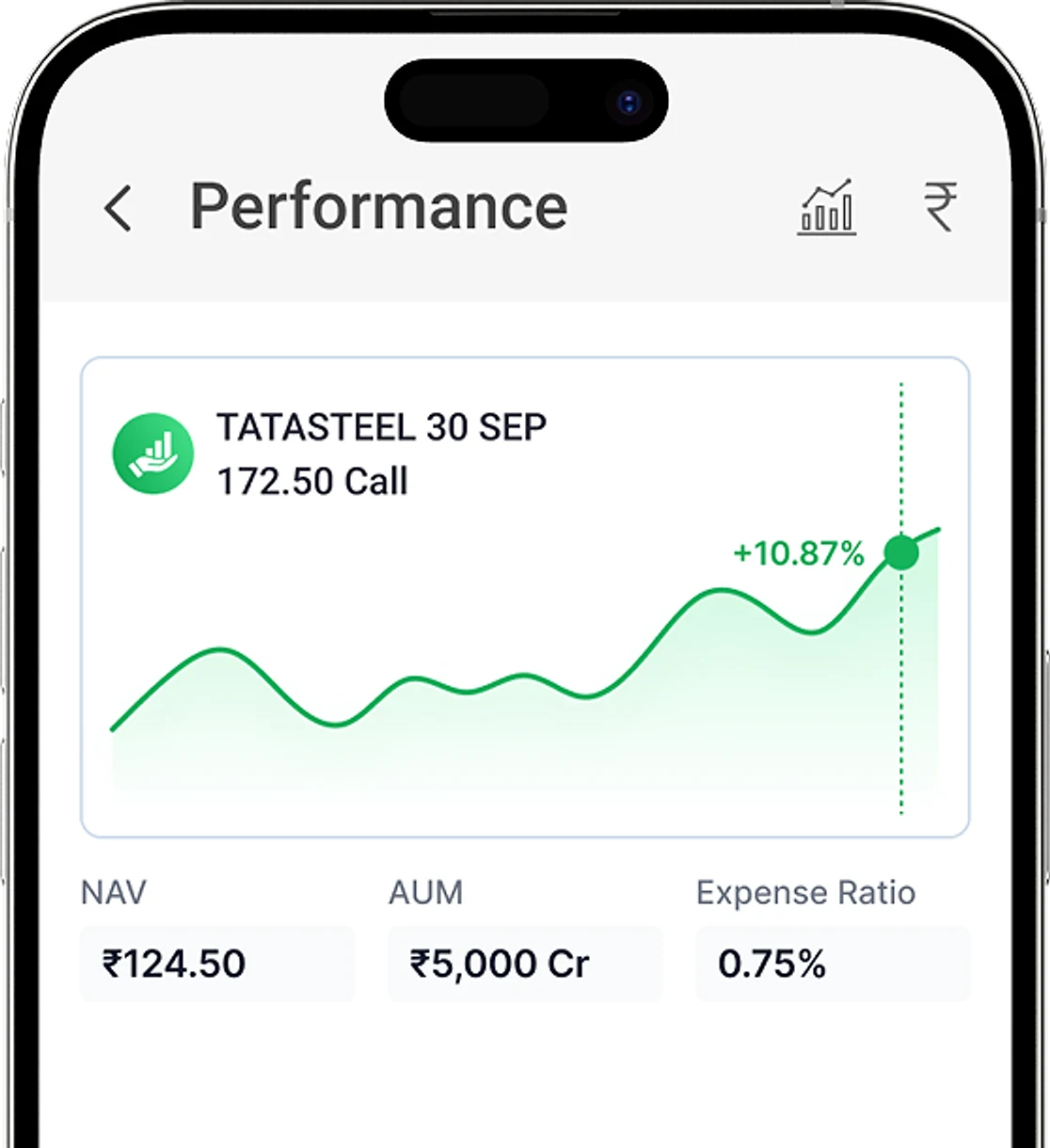
Analyse the fund’s performance & key details
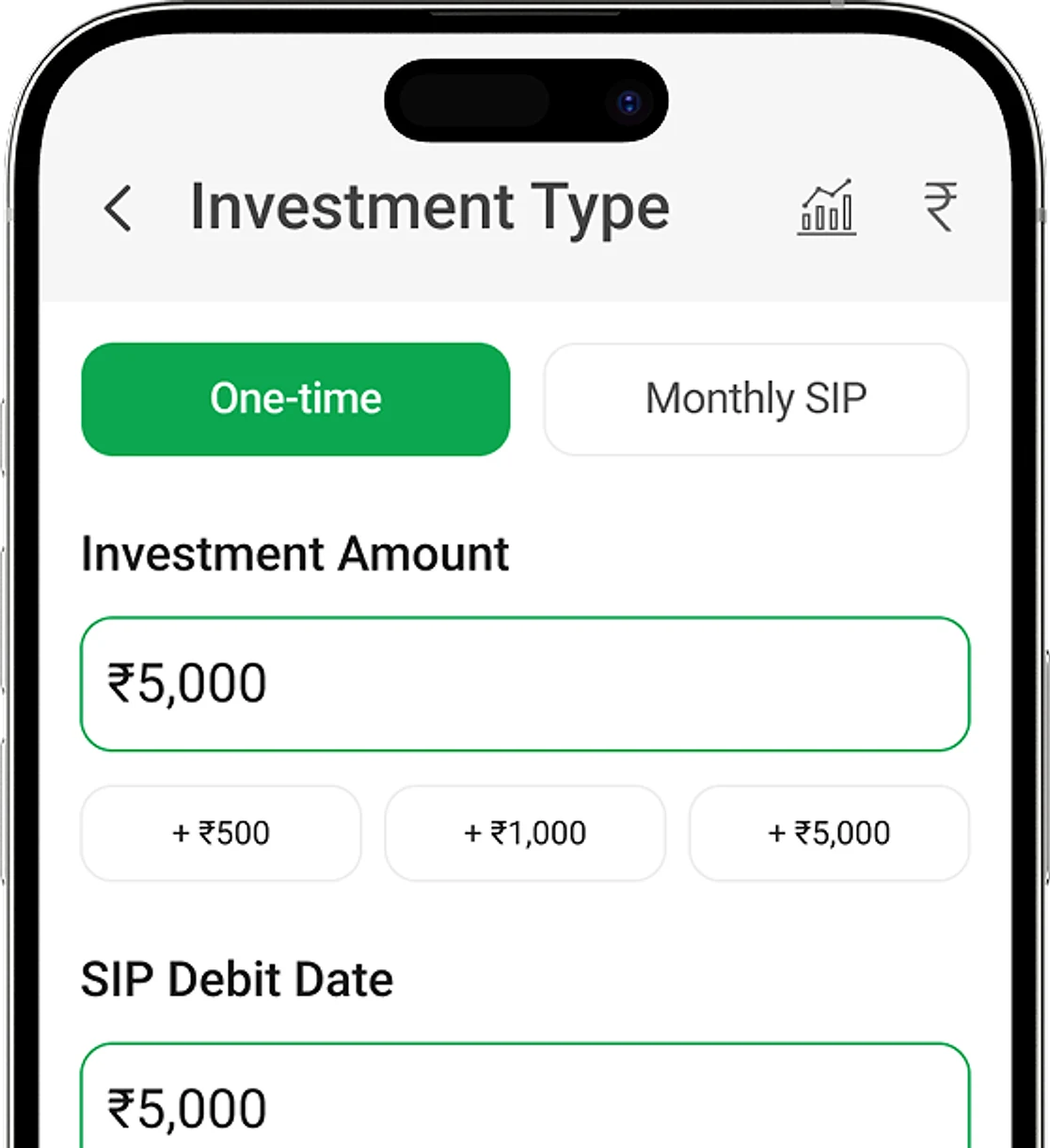
Invest via SIP or make a lump-sum investment
Choose a mutual fund you want to invest in
Analyse the fund’s performance & key details
Invest via SIP or make a lump-sum investment
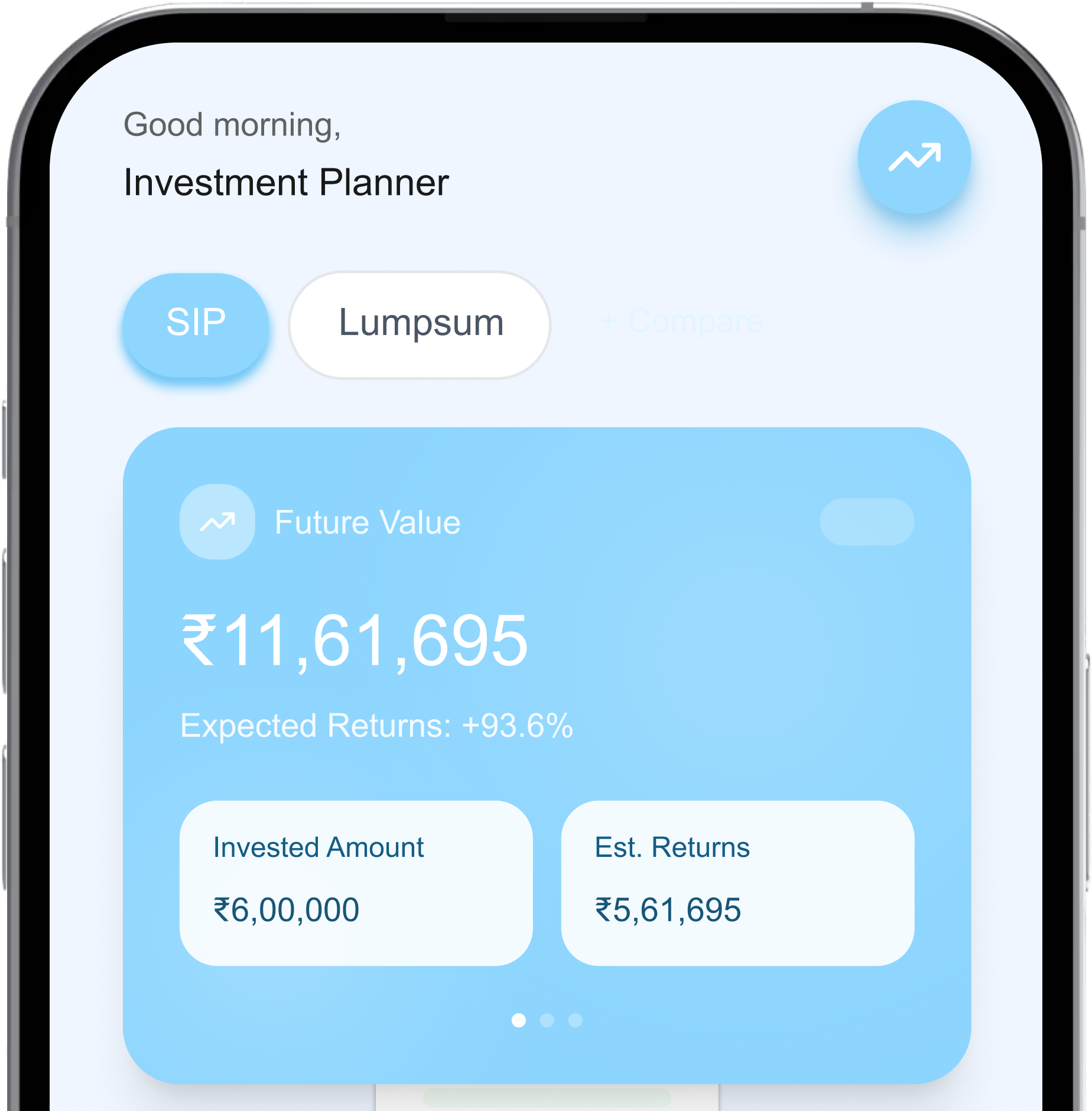
Calculate Before You Invest
Estimate returns and plan mutual fund investments with Stoxkart’s calculators.


Mutual Funds Education for Beginners
Learn what mutual funds are, how mutual fund investing works in India, and build wealth with Stoxkart's investment platform.
What is Mutual Funds
A mutual fund pools money from multiple investors to invest in a diversified portfolio of stocks, bonds, or other securities managed by professional fund managers.
When you invest, you buy units at the Net Asset Value (NAV), which represents the per-unit market value of all fund holdings and fluctuates daily.
Mutual funds are regulated by SEBI and managed by Asset Management Companies (AMCs). Fund managers make investment decisions based on stated fund objectives and strategy.
With Stoxkart, start investing with as little as ₹500 through SIP (Systematic Investment Plan), making wealth creation accessible to everyone regardless of income.
Types of Mutual Funds
1. Equity Funds Invest primarily in stocks for capital appreciation. Include Large Cap, Mid Cap, Small Cap, and Multi Cap funds offering higher growth potential with increased risk.
2. Debt Funds Invest in fixed-income securities like bonds and government securities. Include Liquid Funds, Corporate Bond Funds offering stable returns with lower risk profiles.
3. Hybrid Funds Combine equity and debt investments to balance risk and returns. Aggressive Hybrid has higher equity allocation while Conservative Hybrid emphasizes debt securities.
4. ELSS Funds Tax-saving equity funds with 3-year lock-in period, offering deductions up to ₹1.5 lakh under Section 80C while providing equity market exposure and growth.
Features and Benefits
1. Professional Management Expert fund managers with dedicated research teams analyze markets and select securities, leveraging professional expertise that individual investors may not possess independently.
2. Diversification & Risk Management Investments spread across multiple securities, sectors, and asset classes, significantly reducing concentration risk and protecting your portfolio from individual stock failures or volatility.
3. Affordability & Accessibility Start with just ₹500 monthly through SIP on Stoxkart. Low entry barriers make systematic wealth creation accessible to investors across all income levels.
4. Liquidity & Transparency Open-ended fund units with proceeds credited within 1-3 days. SEBI mandates regular disclosure of holdings, NAV, and performance through factsheets.
How it Works
1. Complete KYC & Choose Funds Submit KYC documents on Stoxkart (one-time process). Research and compare funds based on goals, risk tolerance, investment horizon, expense ratios, and past performance.
2. Select Investment Mode Choose SIP for regular monthly investments with rupee cost averaging benefits, or lump sum for one-time investment based on available capital and strategy.
3. Invest Through Stoxkart Select Direct Plans for lower expense ratios on the Stoxkart platform. Specify investment amount, set up auto-debit for SIPs, and complete payment securely.
4. Track & Review Portfolio Monitor all investments through Stoxkart's dashboard. Check returns, review quarterly statements, analyze fund performance, and rebalance portfolio annually based on changing goals.
What is Mutual Funds
A mutual fund pools money from multiple investors to invest in a diversified portfolio of stocks, bonds, or other securities managed by professional fund managers.
Types of Mutual Funds
Invest primarily in stocks for capital appreciation. Include Large Cap, Mid Cap, Small Cap, and Multi Cap funds offering higher growth potential with increased risk.
Features and Benefits
Expert fund managers with dedicated research teams analyze markets and select securities, leveraging professional expertise that individual investors may not possess independently.
How it Works
Submit KYC documents on Stoxkart (one-time process). Research and compare funds based on goals, risk tolerance, investment horizon, expense ratios, and past performance.
Frequently asked questions
A Mutual Fund is a trust that pools the savings of a number of investors who share a common financial goal. The corpus of the fund is then deployed in investment alternatives that help to meet predefined investment objectives. The income earned through these investments and the capital appreciation realised are shared by its unit holders, in proportion to the number of units owned by them.
Some of the major benefits on investing in a mutual fund are: - Diversification - Professional management - Convenience - Liquidity - Variety of schemes and types - Tax benefits
Equity Funds: An equity fund is a mutual fund that invests principally in stocks. There are several types of equity funds like Diversified, Sector and thematic, Large-cap, Mid-cap, Small-cap, Multi-cap, Index funds etc. Equity Linked Savings Scheme (ELSS) qualifies for tax exemptions upto Rs. 1.50 Lakhs under section (u/s) 80C of the Indian Income Tax Act. Debt Funds: These funds generates returns for the investors by investing in a mix of debt or fixed income securities such as Government Securities, Corporate Bonds, other debt securities of different time horizons. Liquid Funds: These funds invests primarily in money market instruments like certificate of deposits, treasury bills, commercial papers and term deposits and focuses on maintaining liquidity and safety of the investments. Lower maturity period of these underlying assets helps a fund manager in meeting the redemption demand from investors.
Open-ended funds can be bought and sold at any time; they have no fixed tenure.
You can buy units of close-ended mutual funds only when a mutual fund company launches the fund. Once you buy them, you have to hold your investment for a fixed tenure.
A Systematic Investment Plan (SIP) is a convenient method of investing in mutual funds. Under this plan, an investor contributes a fixed amount towards the mutual fund scheme at regular intervals, and gets units at the prevailing NAV.
Investing in SIP offers two major benefits: - You can start investing with a small amount - You can average out your investment, as SIP involves buying units at different points of time and at different NAV levels.
Under a Systematic Withdrawal Plan (SWP), an investor redeems a fixed number of mutual fund units at regular intervals.
NAV stands for Net Asset Value of a mutual fund. This is basically the price of one unit of a mutual fund.
As per SEBI rules mutual funds cannot guarantee you assured returns.
Yes, applicants intending to hold units in dematerialized form will be required to have a beneficiary account with a Depository Participant (DP) of the NSDL/CDSL and will be required to mention in the application form DP's Name, DP ID No. and Beneficiary Account No. with the DP, at the time of purchasing units.
What are you waiting for?
Join the club of zero fees and infinite possibilities. Jump into action now!