


Invest in IPOs Online


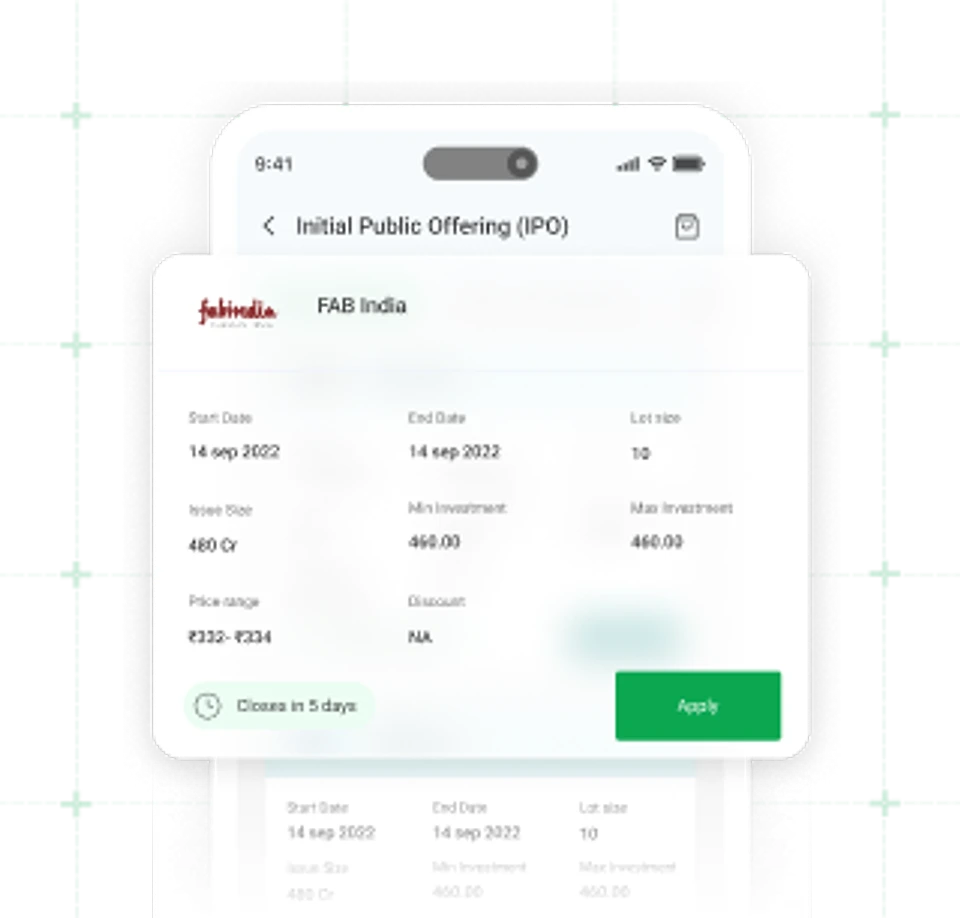
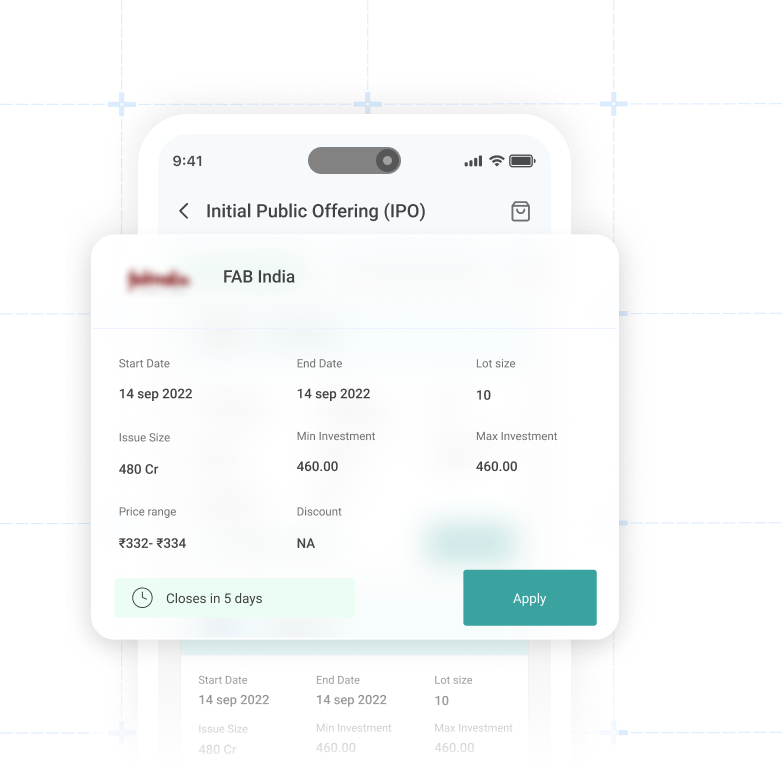
How Stoxkart Simplifies
IPO Investing
Managing your finances has never been easier. StoxKart streamlines your financial journey by offering intuitive tools and features.
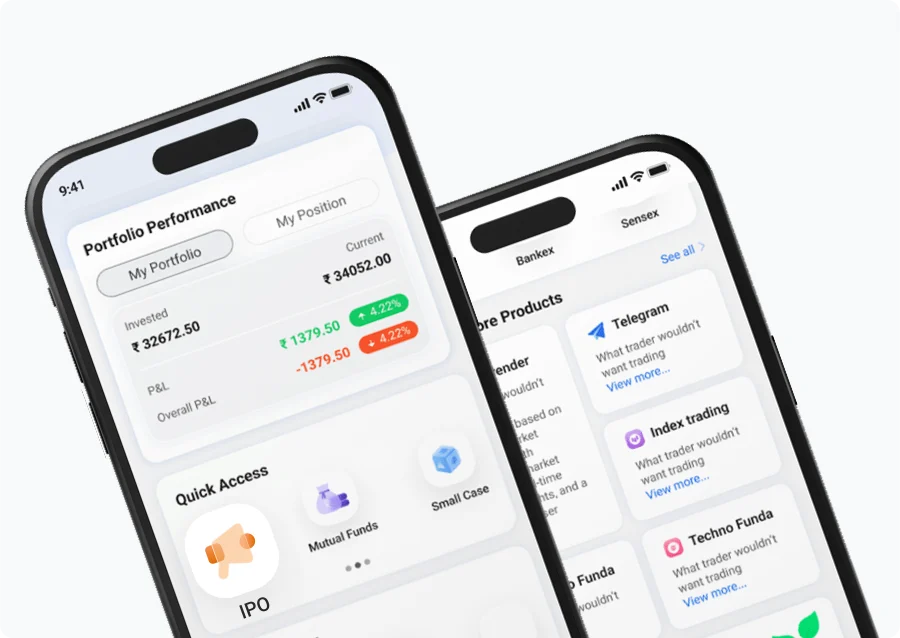
Zero Charges
Investing
Apply for IPOs with no brokerage, commission, or hidden charges.
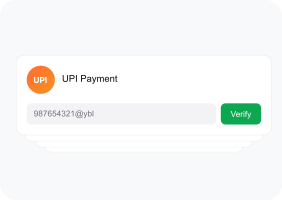
Paperless Application
Process
Apply online using UPI with quick mandate approval.
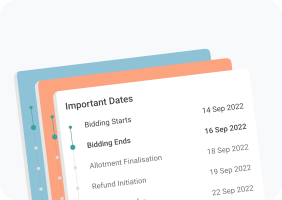
Wide IPO
Access
Invest in Mainboard and SME IPOs with essential issue details.
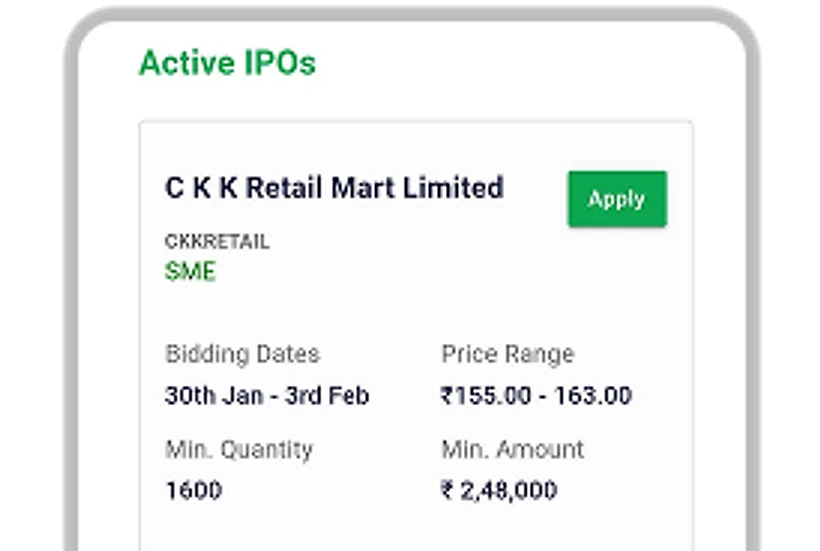
End-to-End IPO
Management
Apply, track allotment, and view holdings in your Stoxkart account
Zero Charges
Investing
Apply for IPOs with no brokerage, commission, or hidden charges.
Subscribe to IPOs in three simple steps
Follow these simple steps to apply for IPOs quickly and securely.
Login to your Stoxkart app or web account
Select an ongoing IPO and place your bid
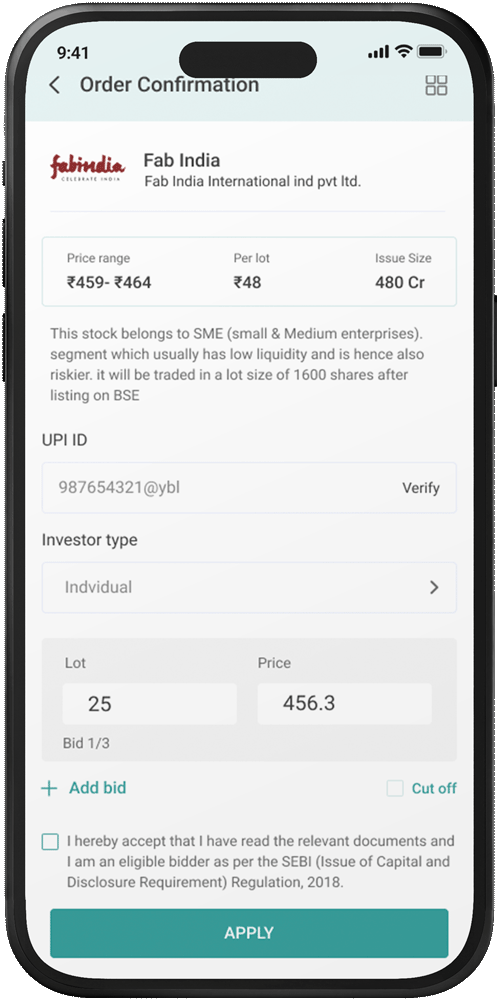
Enter UPI ID and approve mandate to apply
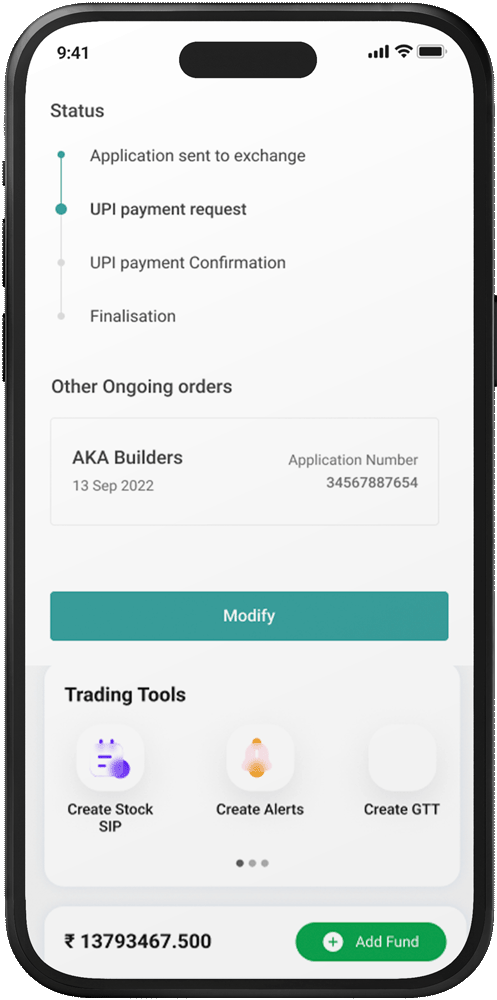
Login to your Stoxkart app or web account
IPO
Learn what an IPO is, how to invest in Initial Public Offerings in India, and discover opportunities with Stoxkart.
What is an IPO?
An IPO (Initial Public Offering) is when a private company offers its shares to the public for the first time and gets listed on stock exchanges like NSE and BSE. Companies launch IPOs to raise capital for business expansion, debt repayment, or working capital needs while transitioning from private to public ownership. For investors, IPOs present opportunities to invest in companies at an early stage of their public journey, potentially benefiting from future growth and listing gains. The IPO price is determined through book-building or fixed price methods. Investors apply during the 3-5 day subscription period through platforms like Stoxkart.
Types of IPO
1. Mainboard IPO
IPOs of established companies listing on main NSE or BSE platforms with minimum ₹10 crore issue size and stricter regulatory requirements for mature businesses.
2. SME IPO
Small and Medium Enterprises list on NSE Emerge or BSE SME platforms with lower entry barriers, starting from ₹1 crore minimum issue size.
3. Book Building IPO
Company specifies a price band, investors bid within this range, and final issue price is determined based on demand from all bidding participants.
4. Fixed Price IPO
Company sets one predetermined price for shares. Investors apply at this fixed price with no bidding range, offering more price certainty upfront.
Features and Benefits
1. Early Investment Opportunity
Invest in companies at the beginning of their public journey, potentially capturing significant growth and appreciation as the business expands over time.
2. Listing Gains Potential
Many IPOs list at a premium above issue price, offering immediate profits on listing day, though gains depend on market conditions and demand.
3. Transparent Process & Fair Allocation
SEBI mandates detailed disclosures and reserves 35% shares for retail investors, ensuring fair access and transparent pricing for all small investors equally.
4. Portfolio Diversification
IPOs bring new innovative business models to market, helping you diversify beyond established stocks and capture emerging industry growth opportunities.
How IPO Works
1. Complete KYC & Check Details
Ensure your Stoxkart demat and trading accounts are active. Review the company's prospectus to understand the business model, financials, risks, and IPO terms.
2. Apply Through Stoxkart
Select the IPO on Stoxkart platform, enter number of lots and bid price if book-building. Funds get blocked via UPI or ASBA process.
3. Allotment Process
After the IPO closes, the basis of allotment is finalized. Oversubscribed IPOs use lottery or proportionate allotment for retail investors based on available shares.
4. Listing & Portfolio Addition
Allotted shares are credited to your demat account on listing day. Track performance on Stoxkart and decide to hold long-term or exit.
What is an IPO?
An IPO (Initial Public Offering) is when a private company offers its shares to the public for the first time and gets listed on stock exchanges like NSE and BSE. Companies launch IPOs to raise capital for business expansion, debt repayment, or working capital needs while transitioning from private to public ownership. For investors, IPOs present opportunities to invest in companies at an early stage of their public journey, potentially benefiting from future growth and listing gains. The IPO price is determined through book-building or fixed price methods. Investors apply during the 3-5 day subscription period through platforms like Stoxkart.
Frequently asked questionsFAQs
If you are wondering how to apply for an IPO, the process is fully online. Investors can apply through Stoxkart using UPI by selecting the IPO, entering bid details, and approving the mandate. Active issues can be tracked under IPO today or IPO open today sections.
Investors searching how to check IPO allotment or how to check IPO allotment status can do so using their PAN or application number on the registrar's website or through their Stoxkart trading account. Allotment details are usually released before the listing date.
If shares are not allotted, the blocked amount in your bank account is released automatically. This typically happens shortly after the allotment process is completed and before the IPO listing date.
If you receive an allotment, shares are credited to your demat account before the stock starts trading. You can then track them along with other holdings once the IPO is listed.
The IPO cycle includes announcement, opening for subscription, closing, allotment, refund initiation, and final listing. Investors often follow the IPO calendar to keep track of each stage and avoid missing important dates.
There is no guaranteed way to decide which IPO is best to buy. Investors should evaluate company fundamentals, valuation, issue pricing, and overall market conditions rather than focusing only on listing-day expectations. Reviewing IPO details, subscription trends, and long-term prospects helps in making balanced decisions.
Investors can follow live IPO updates, upcoming IPO, new IPO list, and latest IPO list sections on trading platforms like Stoxkart to stay informed about current and future opportunities in the IPO market.
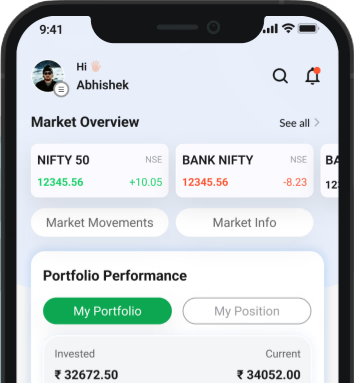
What are you waiting for?
Join the club of zero fees and infinite possibilities. Jump into action now!


What are you waiting for?
Join the club of zero fees and infinite possibilities. Jump into action now!